

Announcements
- Did you miss the September 17 public meeting? Visit the Project Resources below for prior meeting videos, presentations, and responses to meeting questions.
- A Wayfinding & Urban Design Survey Infographic is now available in the Project Resources section. View the infographic to view the survey results and learn more about what we heard from the community.
Project Overview
Quick Links: Project Resources | Interactive Map
The Huntington Drive Multi-Modal Transportation Improvement Project will transform and improve the Huntington Drive corridor for all modes of transportation, including vehicles, buses, bicycles and pedestrians with enhanced access to commercial businesses, residential neighborhoods, educational facilities, recreational centers and industrial properties. LABOE in partnership with Councilmember Ysabel Jurado (Council District 14), plan to enhance vehicular circulation, upgrade transit service and ridership, improve bicycle and pedestrian safety and access, and integrate modern technology and travel options. Through this project, Huntington Drive would thus become a high-quality regional mobility corridor connecting various Eastside communities to Downtown Los Angeles.
The project benefits include:
- Improve mobility for all roadway users, including vehicles, bicyclists, and pedestrians
- Improve traffic flow and enhance safety
- Improve transit speed & reliability
- Increase tree canopy and shade
- Create vibrant streets that support community life and local businesses
Study Corridor
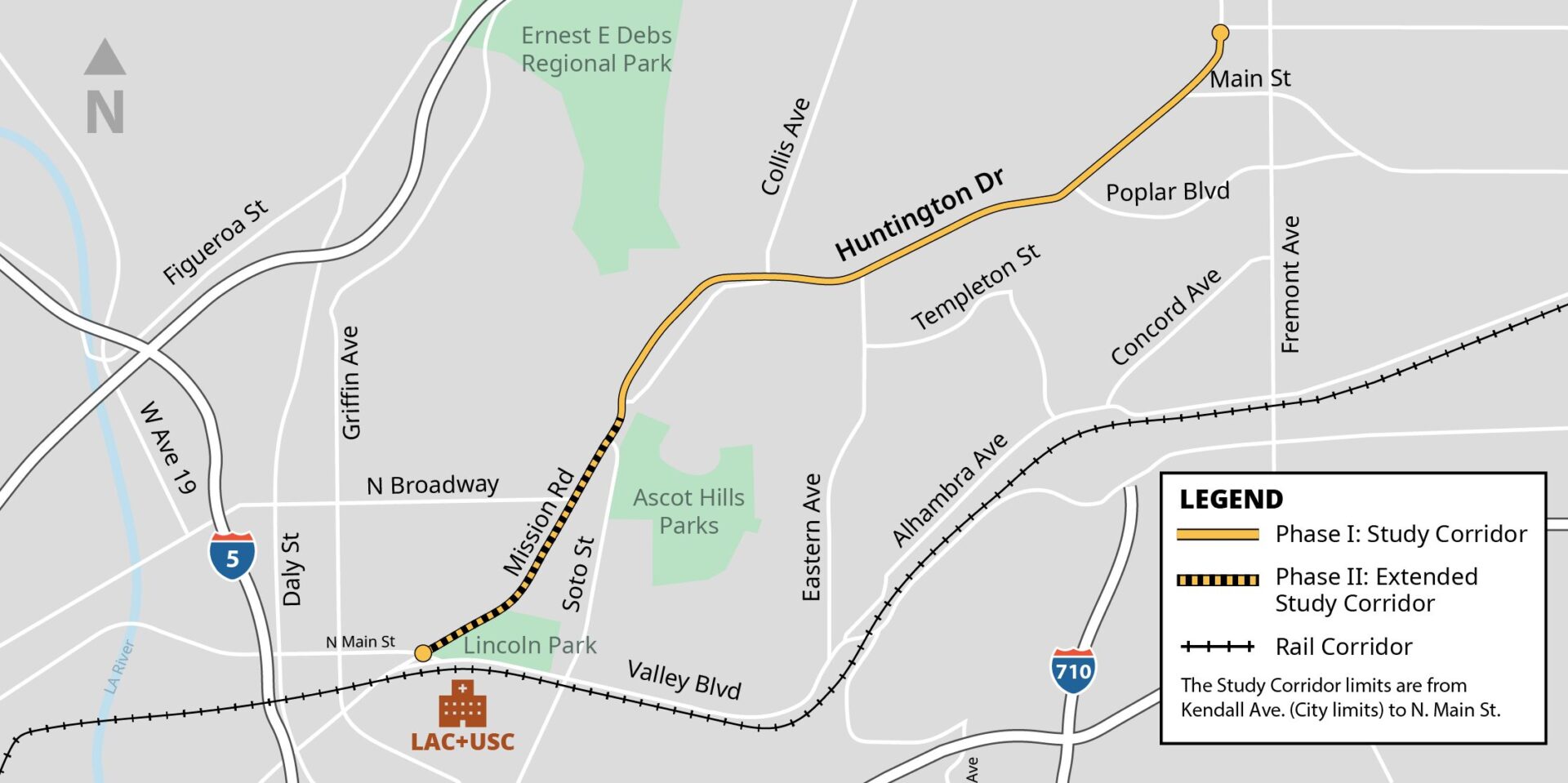
The project corridor begins at N Main Street and stretches for 4-miles along N Mission Road and Huntington Drive to Kendall Avenue at the City limit.
Project Gallery

The Project Phases
Phase I (2021-2022)
- 3-mile corridor feasibility study conducted from Soto Street to Kendall Avenue at the City limit.
- Initial community survey issued in summer 2021, receiving nearly 700 responses.
- Common themes included: expansion of safe pedestrian amenities, increased bus shelter and sidewalk improvements (including ADA accessibility), and safer bike lanes.
- Two key objectives identified: expansion of open space along the corridor and reevaluation of project assumptions and community needs.
Phase II (2023-2024):
- A Preferred Alternative selected by refining and reevaluating alternatives to meet updated project goals.
- Project study area extended to a 4-mile stretch along Mission Road, from N. Main Street to N. Soto Street.
- Common themes included: neighborhood identity and community utilization of space, concerns for safety, interest in a more connected and functional bicycle network, and preference for active sidewalks over a median open space.
Phase III (Start 2026)
- Refines the preferred corridor concept to align with funding feasibility and implementation readiness.
- Advances required environmental review, documentation, and clearance in compliance with applicable regulations.
- Moves the project into advanced engineering, with progressive rounds of detailed design to prepare for construction.
- Includes fall 2026 community engagement, featuring a community survey focused on wayfinding and placemaking, and a public meeting to gather valuable community feedback on design updates.
The final multi-modal alternative will be developed in accordance with current, City design standards, requirements, and proposed project goals.
The Planning Process
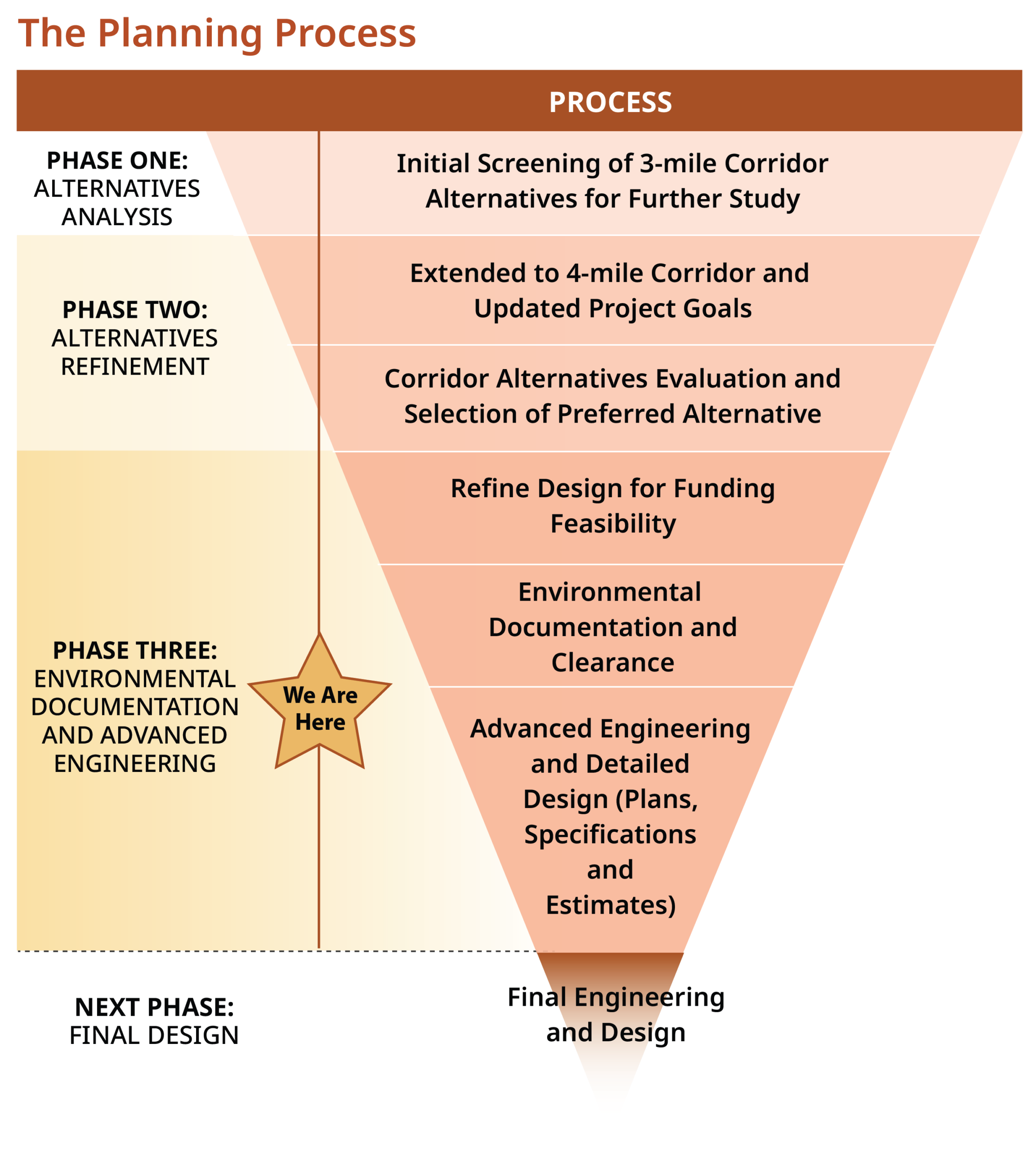
Find fact sheets, survey results, videos, meeting presentation materials and more in the resources linked below. Use the zoom function for easier reading, or download files for best results.
- Fact Sheets
- Community Survey
- Public Meeting
- Public Meeting Response Log
- Responses to Questions Not Addressed During Meeting (View Here)
- Fact Sheets
- Overview Fact Sheet (English | Spanish)
- Existing Conditions Fact Sheet (English | Spanish)
- Alternatives Evaluations Framework Fact Sheet (English)
- Community Meetings
- October 2, 2024
- June 26, 2024
- Community Hybrid Meeting Video (English | Spanish)
- Presentation (English | Spanish)
- In-person Station Guide (English-Spanish)
- In-person Display Materials (All English & Spanish)
- Survey Results (English | Spanish)
Interactive Map
Quick Links: Project Overview | Project Resources | Back to Top
The Huntington Drive Multi-Modal Transportation Improvement Project is a four-mile stretch connecting the City of Alhambra and South Pasadena to North Mission Road near LAC+USC Medical Center. This section of Huntington Drive is a heavily trafficked, three-lane north-bound and south-bound roadway that serves residential, commercial, institutional, recreational and industrial land uses the Huntington Drive corridor from Kendall Avenue (City limits) to N. Soto Street will be two lanes of travel in each direction, repurposing one lane of travel in each direction for pedestrian, bicycle, transit and streetscape functions.